By Leila Verzella
As the first quarter closes, Branford High School’s cellphone ban has brought about some noticeable changes in the school, especially in the library.
Student use of the BHS library has tripled since the beginning of the year, and book circulation has increased over 30 percent, officials said.
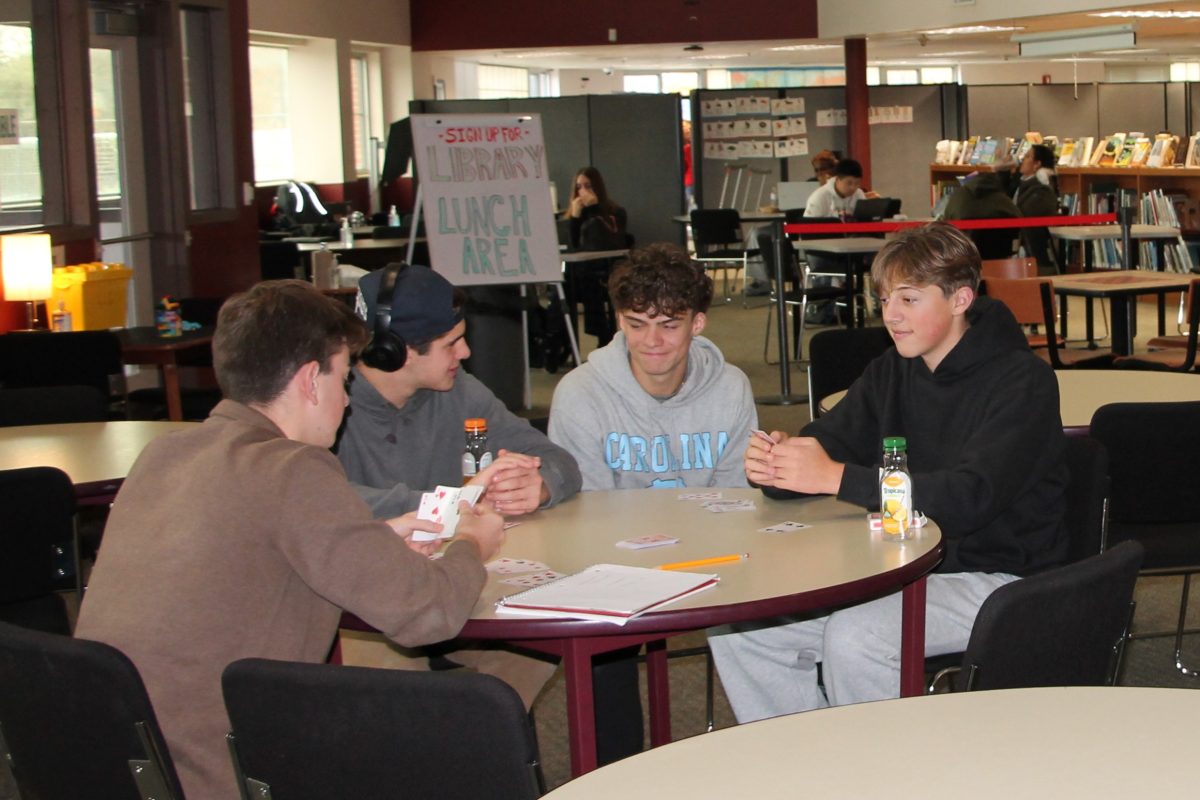
“Students are more engaged,” said school librarian Dr. Belinha De Abreu. “They are having conversations, playing chess or board games, working on some difficult puzzles, and reading more.”
While cellphones are no longer allowed in school, books are welcomed more than ever, she added.
Keegan Dingus, a junior, said that only spends time in the library during study halls but he said he has seen a change in the way the students use the library stations and get school work done.
“Students aren’t just sitting by the window scrolling,” he said.
Another student, junior Rebecca Law, said she believes “that with the lack of phone use it has allowed a lot of students to use the library more effectively and get more work done, instead of being on their phones and personal devices doing other things.”
As a result of increased interest, the library has begun offering more activities for students to do in between classes, including puzzles, games and even just a comfortable place to sit and socialize with friends.
 With cell phone use restricted in school, more students are using the school library to social or play games, including these four students playing “Imposter.”
Branford is one of a growing number of school districts in the United States that have banned the student use of cellphones in school. The use of Yondr pouches and cellphone bans is still a somewhat new process, however the impact of them is beginning to be revealed. In schools where cellphone bans have begun to be enforced, educators have seen an increase in test scores, reading and math abilities, and social skills. Other districts around the country have seen other unexpected results.
De Abreu and others have witnessed this trend first hand in Branford. The BHS library, a place which used to be empty, has become a social hub, and students have begun to visit, “all the time” according to De Abreu.
As a result, the library has also increased offerings to students, both to help with their work and to provide some needed down time between classes. For example, the library added a LEGO station and drawing station as well as other manipulatives for student use, she said.
“Students want to be in the library because we provide them with opportunities to participate in various activities,” she said. “We also have many variations of workspaces to accommodate students who want to work alone or in groups. Students are here either doing their homework, researching, or finishing projects. We have students who have been filming short action films or using the podcast system to record.”
Dr. De Abreu said the use of Yondr pouches to restrict phone use has been successful.
So far.
“The Yondr system works when everyone is invested in it,” she concluded.
WHAT TO READ NEXT IN THE BUZZ